Key takeaways
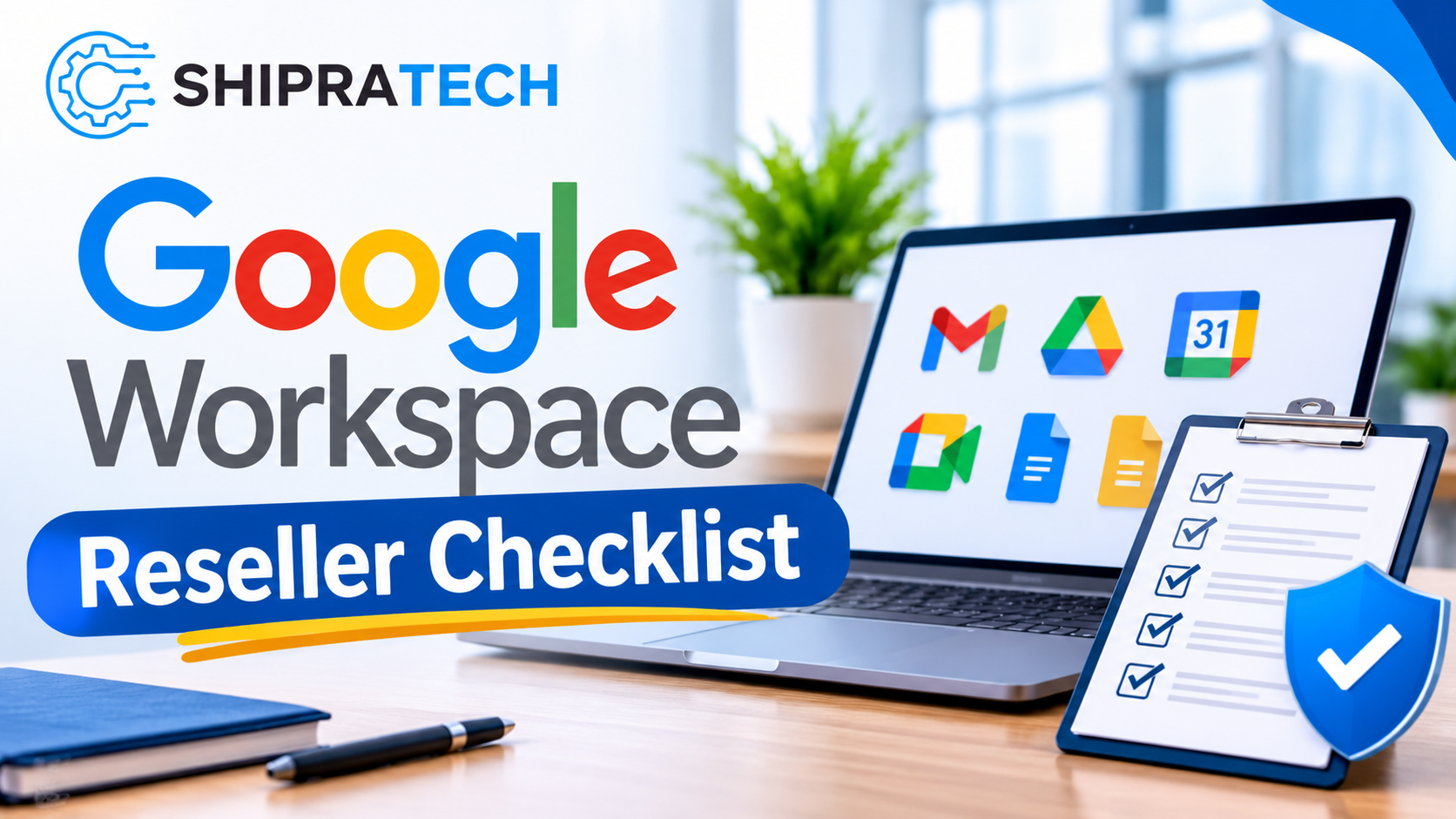
- Use a risk‑based scoring matrix to compare resellers.
- Validate security certifications and SLA commitments.
- Follow the 7‑step due‑diligence checklist before signing.
Written by the Shipra Technologies team. Last updated 30 October 2026.
Table of Contents
- What is a Google Workspace reseller? Why it matters
- Evaluating Reseller Capabilities: Security, Compliance, SLA, and TCO
- Seven‑Step Due‑Diligence Process for Procurement Teams
- Frequently Asked Questions
- How can I confirm that a Google Workspace reseller is officially authorized in India?
- What security certifications should a reseller possess for regulated data?
- Which SLA metrics are most critical for enterprise‑grade Google Workspace services?
- How does total cost of ownership differ between a reseller and direct Google purchase?
- What governance steps should be taken after signing with a Google Workspace reseller?
- Conclusion: Choosing the right Google Workspace reseller
- Get a Free Quote
What is a Google Workspace reseller? Why it matters
A google workspace reseller is a vetted partner that sells, provisions, and supports Google’s productivity suite for the buying organization. Choosing an authorized reseller protects licensing integrity, guarantees premium support, and shields the business from hidden fees or data‑privacy slips that can quickly erode trust and budgets.
A recent audit showed that many Indian enterprises faced data‑security gaps after onboarding an unverified google workspace reseller. Hidden costs of non‑compliance can eclipse licensing fees within months. When a reseller lacks proper authorization, data may be stored in unapproved regions, support response times can be slow, and hidden migration fees often appear later. For IT heads, CTOs, and procurement leads, the risk is not just financial—it can damage brand reputation and trigger regulatory penalties. A disciplined due‑diligence process is essential before signing any google workspace reseller contract.
Role of a reseller in the Google ecosystem
A google workspace reseller acts as the bridge between Google and the enterprise. It handles licensing, billing, migration assistance, and ongoing admin support. The reseller also offers local expertise on data‑residency rules and helps customize the suite for industry‑specific workflows. This role is critical for large organizations that need coordinated rollout across multiple locations.
![]()
Evaluating Reseller Capabilities: Security, Compliance, SLA, and TCO
When procurement teams compare options, they should score each contender on four pillars—security, compliance, service‑level agreement (SLA), and total cost of ownership (TCO). A side‑by‑side matrix makes gaps visible, allowing a data‑driven choice that respects both risk tolerance and budget reality.
| Capability | What to Verify | Typical Benchmark |
|---|---|---|
| Security certifications | ISO 27001, SOC 2, GDPR | Current, audited annually |
| Data‑residency guarantee | Data stored in India or approved region | Explicit clause in contract |
| Compliance alignment | Adherence to RBI, IT Act, GDPR | Mapping matrix provided |
| SLA response time | Critical issue < 2 hrs, high < 4 hrs | 99.9% uptime guarantee |
| TCO components | License fee, migration cost, support | Transparent per‑user pricing |
Security certifications and data‑residency guarantees
Security certifications act like a passport stamp confirming the google workspace reseller follows globally‑accepted controls. Look for ISO 27001, SOC 2 Type II, and any Indian‑specific attestations. A data‑residency guarantee is the safety net that keeps your files inside the geographic fence you’ve drawn, preventing unwanted cross‑border exposure.
⭐ Pro Tip: Request a copy of the most recent audit report and verify the certificate numbers directly with the issuing body.
Compliance alignment with Indian regulations
Compliance alignment means the google workspace reseller can translate RBI, IT Act, and sector‑specific rules (such as HIPAA for health data) into concrete actions within Google Workspace. They should hand you a compliance matrix that maps every Google feature to the relevant legal clause, turning abstract law into an actionable checklist.
For deeper guidance, see the Google Workspace Reseller: Complete Guide.
Service‑level agreements and escalation paths
A rock‑solid SLA spells out uptime guarantees, response windows, and the exact steps to remediate an incident. Critical tickets should trigger a response within two hours, and a documented escalation ladder must reach senior engineers before the problem escalates. Without these clauses, a migration hiccup can turn into a multi‑day outage.
⭐ Pro Tip: Insist on a penalty clause for missed SLA targets to keep the reseller accountable.
Total cost of ownership versus direct purchase
Total cost of ownership bundles license fees, migration labor, ongoing support, and any hidden extras like extra storage or premium add‑ons. Buying straight from Google may look cheaper per seat, but it often omits the hands‑on migration expertise and localized support that a google workspace reseller bundles, which can inflate the true spend.
The Google Workspace Reseller vs Direct Buy: Which Is Better for Your Business? article breaks down the cost differences in detail.
![]()
Seven‑Step Due‑Diligence Process for Procurement Teams
The following seven‑step workflow walks IT and procurement leaders from initial vetting to a controlled pilot, ensuring every risk vector is measured, recorded, and mitigated before a full‑scale contract is inked.
Step 1 – Verify Google authorization status
Confirm the partner appears in Google’s official partner directory, as described in the Google Workspace quickstart for resellers. This quick check weeds out rogue vendors before you invest time.
Step 2 – Conduct security and compliance audit
Ask for the latest ISO 27001 and SOC 2 reports, and compare the google workspace reseller’s data‑residency policy against your organization’s location requirements. Map each Google Workspace control to Indian regulatory clauses.
Step 3 – Model migration risk and integration effort
Create a risk‑based vendor scoring framework that rates the complexity of moving existing mailboxes, shared drives, and third‑party integrations. Estimate effort in person‑days and factor it into the TCO model.
💡 Ready to secure your Google Workspace procurement? Contact Shipra Technologies for a tailored due‑diligence review and trusted reseller partnership.
Step 4 – Negotiate SLA and remediation clauses
Insert clear metrics for availability, response time, and resolution. Add a post‑contract audit and remediation process that allows you to request a third‑party review if SLA breaches occur. You can also review the Contact your Google reseller page for escalation details.
Step 5 – Calculate total cost of ownership
Combine license fees, migration labor, ongoing support, and any contingency buffers. Compare this figure to the direct‑purchase model to see where value is added.
Step 6 – Pilot with a controlled user group
Run a pilot in a single business unit or geographic location. Track performance, support tickets, and user satisfaction. Use the results to fine‑tune the rollout plan.
Step 7 – Formalize governance and rollout plan
Develop a multi‑location governance checklist that outlines who approves changes, how data‑access reviews are performed, and the cadence of compliance reporting. This checklist becomes the backbone of the enterprise migration.
![]()
Frequently Asked Questions
How can I confirm that a Google Workspace reseller is officially authorized in India?
The first step is to search Google’s Partner Directory for the reseller’s name and look for the “Authorized Reseller – India” badge. The directory also reveals the partner’s tier and any specialty certifications, giving you a quick gauge of their depth of expertise and regional legitimacy.
You can confirm authorization by checking Google’s Partner Directory for the reseller’s name and verifying the “Authorized Reseller – India” badge. The directory also lists the partner’s tier and any specializations, which helps you gauge expertise.
What security certifications should a reseller possess for regulated data?
At a minimum, a reputable google workspace reseller should hold ISO 27001 and SOC 2 Type II attestations, which prove they follow recognized security frameworks. If you handle financial or health records, ask for additional proofs such as PCI‑DSS or HIPAA‑aligned controls, and always request the most recent audit reports for verification.
A reseller should hold ISO 27001 and SOC 2 Type II certifications at a minimum. If you handle financial or health data, look for additional attestations such as PCI‑DSS or HIPAA‑aligned controls, and request the latest audit reports.
Which SLA metrics are most critical for enterprise‑grade Google Workspace services?
Enterprise‑grade SLAs should guarantee 99.9 % uptime, a response time under two hours for critical incidents, and a defined escalation ladder that reaches senior engineers within four hours. Embedding financial penalties for missed targets turns the SLA from a promise into an enforceable contract clause.
Critical SLA metrics include 99.9% uptime, response time under two hours for critical incidents, and a defined escalation path that reaches senior engineering within four hours. Penalties for missed targets should be spelled out in the contract.
How does total cost of ownership differ between a reseller and direct Google purchase?
When you buy through a google workspace reseller, the TCO bundles migration services, localized support, and compliance consulting on top of the base license fee. Direct purchase may look cheaper per seat, but you’ll likely pay separate contracts for migration and support, which can push the overall spend higher than anticipated.
TCO for a reseller adds migration services, localized support, and bundled compliance assistance to the base license fee. Direct purchase may have a lower per‑seat cost but often requires separate contracts for migration and support, which can increase overall spend.
What governance steps should be taken after signing with a Google Workspace reseller?
Post‑contract, set up a multi‑location governance checklist, schedule regular audits, and define a remediation workflow for any SLA breaches. Document every change‑approval process and maintain a live compliance dashboard so leadership can see risk posture at a glance.
After signing, establish a multi‑location governance checklist, schedule regular post‑contract audits, and set up a remediation process for any SLA breaches. Document all change‑approval workflows and maintain a compliance dashboard for ongoing oversight.
Conclusion: Choosing the right Google Workspace reseller
A methodical, checklist‑driven strategy turns google workspace reseller selection from a gamble into a strategic win. It safeguards data, caps hidden costs, and meets every compliance checkpoint. By confirming authorization, auditing security posture, mapping migration risk, and locking in strong SLA terms, you ensure the partnership delivers genuine value rather than unseen liabilities.
The Shipra view: Shipra Technologies is a B2B cloud, cybersecurity and IT services company that helps Indian enterprises navigate complex cloud contracts. Our team provides independent due‑diligence reviews, ensuring that every reseller engagement meets strict security and compliance standards.
If you found this checklist useful, share your thoughts in the comments or reach out to discuss how your organization can build a resilient Google Workspace procurement strategy.
💡 Want expert help? Contact Shipra Technologies today to start your due‑diligence journey with a trusted google workspace reseller partner.
Talk to Our Team
Speak with Shipra Technologies about your cloud, cybersecurity and IT services requirements.
Website: Shipra Technologies