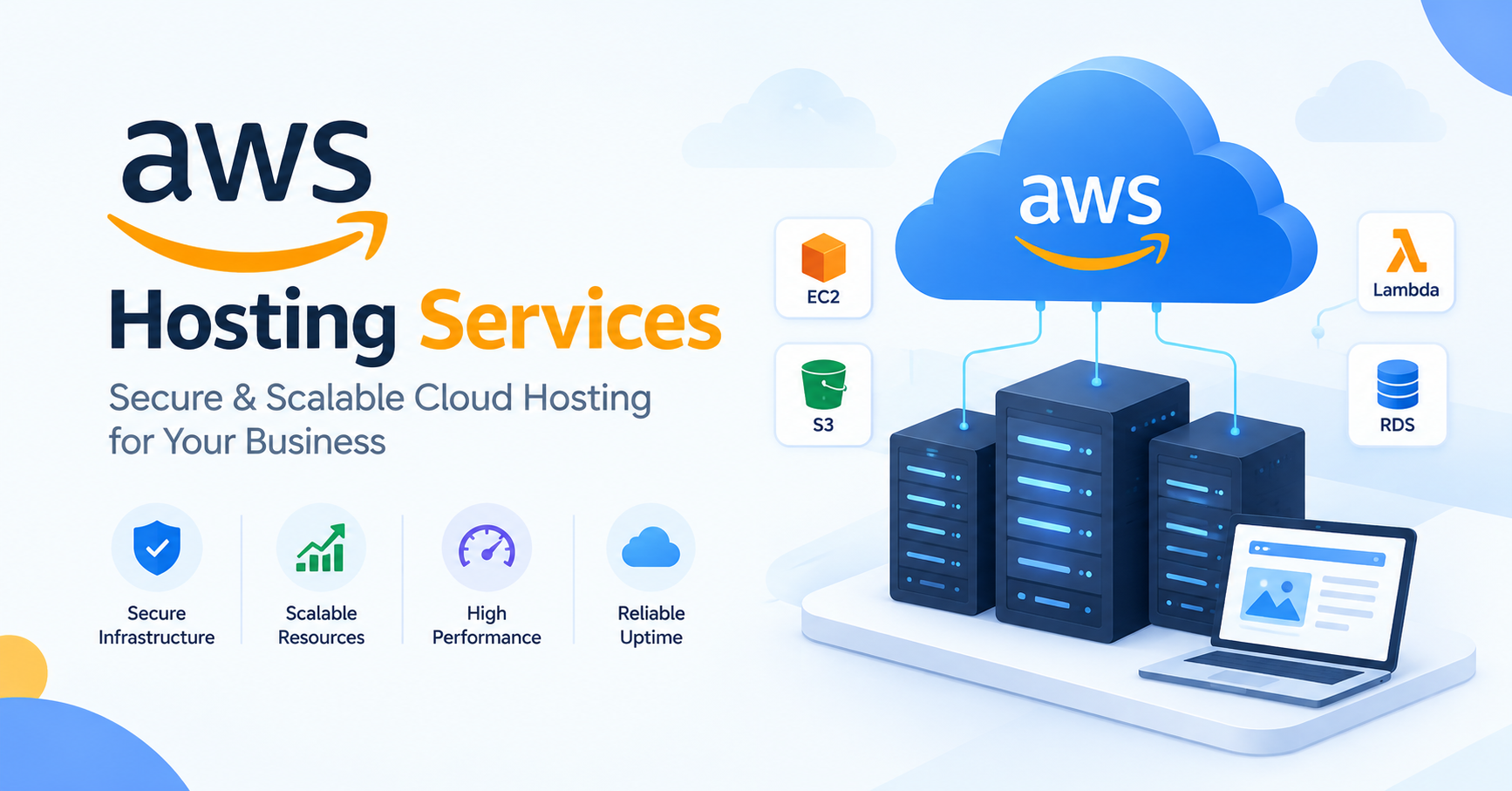
Businesses today need reliable, secure, and scalable hosting to keep their websites, applications, and digital operations running smoothly. Traditional hosting may work for small websites, but growing businesses often need more flexibility, performance, and control over their infrastructure.
AWS Hosting Services provide cloud-based infrastructure that helps businesses host websites, applications, databases, and enterprise workloads according to their requirements. With Amazon Web Services (AWS), businesses can scale resources, improve availability, and manage infrastructure without investing heavily in physical servers.
In this guide, we will explore AWS cloud hosting, its benefits, popular services, and how to choose the right AWS hosting provider for your business.
What Are AWS Hosting Services?
AWS Hosting Services use Amazon Web Services cloud infrastructure to host websites, web applications, databases, and business software. Instead of depending entirely on physical servers, businesses can use cloud resources according to their workloads.
AWS offers multiple hosting options, including virtual servers, managed application platforms, container services, and serverless computing. The right solution depends on your website traffic, application architecture, security requirements, and budget.
Whether you operate a business website, an e-commerce store, or a complex web application, AWS hosting can provide a flexible foundation for your online operations.
Key Benefits of AWS Cloud Hosting
1. Scalability and Flexibility
One of the major advantages of AWS cloud hosting is the ability to adjust computing resources as business requirements change. You can scale your infrastructure to accommodate traffic growth, seasonal demand, or new applications.
This flexibility helps businesses avoid purchasing unnecessary server capacity in advance.
2. Reliable Performance and Availability
AWS provides infrastructure and services designed to support reliable applications. Businesses can deploy resources across multiple Availability Zones and configure backups, load balancing, and recovery strategies where appropriate.
Actual uptime depends on your architecture, configuration, and selected AWS services.
3. Security and Access Control
AWS provides security capabilities such as Identity and Access Management (IAM), encryption options, network controls, logging, and monitoring.
Businesses can use these features to control access to cloud resources and protect sensitive information. However, security also depends on correct configuration, application security, and ongoing monitoring.
4. Cost Management
AWS follows different pricing models depending on the services and resources used. Businesses can select suitable instance types, monitor usage, and apply cost-optimization practices to manage spending.
AWS hosting costs may include computing, storage, data transfer, backups, monitoring, and additional managed services. Regular cost reviews can help prevent unexpected expenses.
5. Global Infrastructure
AWS has a global infrastructure that enables businesses to deploy workloads in suitable geographic regions. Choosing appropriate regions and content delivery services can help improve performance for users in different locations.
Popular AWS Services for Website Hosting
Selecting the right AWS services is essential for building a hosting environment that meets your business needs.
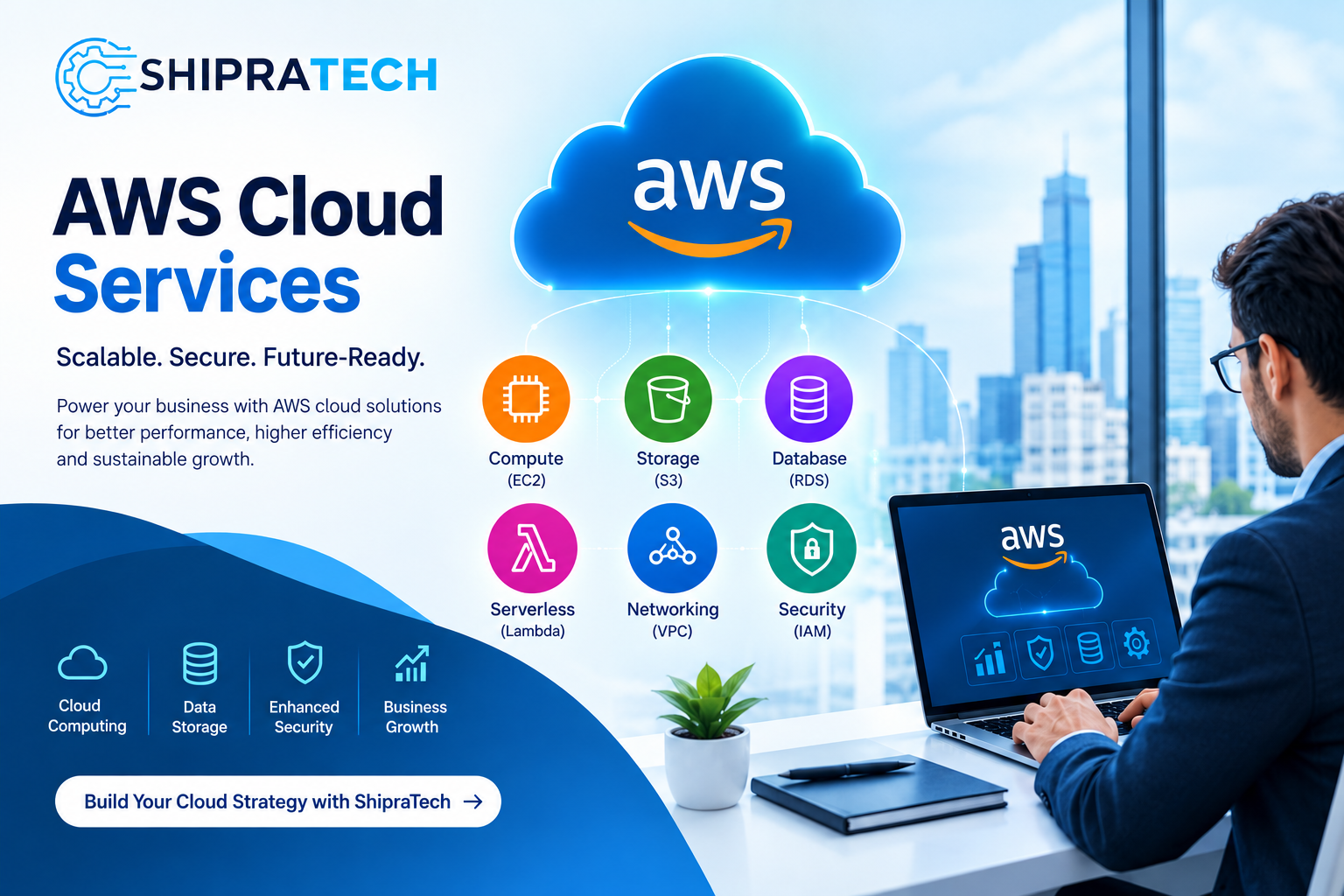
Amazon EC2
Amazon Elastic Compute Cloud (EC2) provides virtual servers for hosting websites, applications, and custom software. It offers control over computing resources and operating system configurations.
EC2 is suitable for businesses that need flexibility and greater control over their hosting environment.
Amazon S3
Amazon Simple Storage Service (S3) provides object storage for files, images, backups, documents, and other data. It can also host certain static website configurations when appropriately set up with the required access and delivery arrangements.
AWS Lambda
AWS Lambda runs code in response to events without requiring you to manage the underlying servers directly. It is useful for event-driven applications, APIs, automated tasks, and backend processing.
Elastic Load Balancing
Elastic Load Balancing distributes incoming application traffic across configured targets. When combined with suitable infrastructure, it can help support application availability and handle changing traffic levels.
Amazon CloudFront
Amazon CloudFront is a content delivery network that distributes content through a global network of edge locations. It can reduce latency for website visitors and improve the delivery of static and dynamic content.
Amazon RDS
Amazon Relational Database Service (RDS) simplifies the setup and management of supported relational databases. It is useful for websites and applications that depend on structured data.
AWS Web Hosting vs Traditional Hosting
Choosing between AWS web hosting and traditional hosting depends on your technical requirements and business goals.
- Scalability: AWS offers flexible resource options, while traditional hosting plans may have more fixed limits.
- Control: AWS supports detailed infrastructure configurations, whereas managed traditional hosting may provide a simpler experience.
- Pricing: AWS costs depend on service usage and configuration. Traditional hosting may offer more predictable package pricing.
- Management: AWS can require cloud expertise unless you use managed services or a hosting partner.
- Use cases: AWS is well suited to scalable applications and customized environments, while traditional hosting may be sufficient for smaller websites with straightforward needs.
AWS is not automatically the best choice for every website. Compare the total cost, management requirements, expected traffic, and technical complexity before deciding.
How to Choose the Right AWS Hosting Provider
An experienced AWS hosting provider can help businesses design, deploy, and manage cloud infrastructure according to their requirements.
Before selecting a provider, consider these factors:
- Technical expertise: Check experience with AWS architecture, deployments, migrations, and troubleshooting.
- Security practices: Ask about access controls, backups, monitoring, patching, and incident response.
- Performance optimization: Look for expertise in load balancing, caching, database performance, and resource sizing.
- Cost optimization: Choose a provider that can review cloud usage, identify waste, and recommend appropriate resources.
- Support availability: Confirm response times, escalation procedures, and the scope of ongoing support.
- Migration planning: Make sure the provider can assess dependencies, plan migration, test the application, and support rollback if necessary.
The right partner should align your cloud environment with your business objectives rather than simply deploying servers.
Why Businesses Choose AWS Cloud Hosting
AWS cloud hosting can support startups, small and medium-sized businesses, e-commerce platforms, SaaS companies, and enterprises.
Common use cases include:
- Business websites and web applications
- E-commerce stores and online platforms
- Application development and testing environments
- Business databases and file storage
- Backup and disaster recovery systems
- Scalable APIs and serverless applications
- Enterprise workloads and cloud migration projects
A well-planned AWS environment can help businesses adapt to changing requirements while maintaining control over infrastructure, security, and operating costs.
Frequently Asked Questions (FAQs)
1. What are AWS Hosting Services?
AWS Hosting Services use Amazon Web Services cloud infrastructure to host websites, applications, databases, and other digital workloads.
2. What is AWS web hosting used for?
AWS web hosting is used for business websites, e-commerce platforms, web applications, APIs, and other online services that need flexible cloud resources.
3. Is AWS cloud hosting suitable for small businesses?
Yes. Small businesses can use AWS for websites and applications, provided the selected services and configurations match their technical needs and budget.
4. How much do AWS Hosting Services cost?
The cost depends on computing resources, storage, data transfer, databases, backups, and other services. Actual charges vary with usage and configuration, so estimate costs before deployment and monitor them regularly.
5. How do I choose an AWS hosting provider?
Evaluate the provider’s AWS expertise, security practices, support arrangements, migration experience, monitoring capabilities, and ability to optimize cloud costs.
6. Is AWS hosting secure?
AWS offers security tools and infrastructure controls, but businesses must configure and manage their environments correctly. Security depends on the shared responsibilities of AWS and the customer.
7. Can I migrate my existing website to AWS?
Yes. Most websites can be migrated after assessing the application’s technology, database, dependencies, DNS, security requirements, and expected downtime.
8. What is the difference between AWS hosting and AWS cloud hosting?
The terms are often used interchangeably. AWS hosting generally refers to hosting workloads on AWS, while AWS cloud hosting emphasizes the cloud infrastructure and resources used to deliver the service.
Conclusion
AWS Hosting Services provide businesses with a flexible and scalable way to host websites, applications, databases, and other digital workloads. With services such as Amazon EC2, S3, Lambda, CloudFront, and RDS, businesses can build cloud environments that support performance, security, and future growth.
Choosing the right AWS cloud hosting solution requires careful planning, cost management, security configuration, and ongoing monitoring. Whether you are launching a new website or migrating an existing application, selecting the right AWS hosting provider can help simplify the process and align your infrastructure with your business goals.
By evaluating your requirements and using the appropriate AWS services, your business can build a reliable cloud foundation for long-term growth.
Get Started
Need a custom quote or help planning your AWS hosting infrastructure?
ShipraTech
📞 +91 83770 04033
📧 connect@shipratech.com
🌐Shipratech